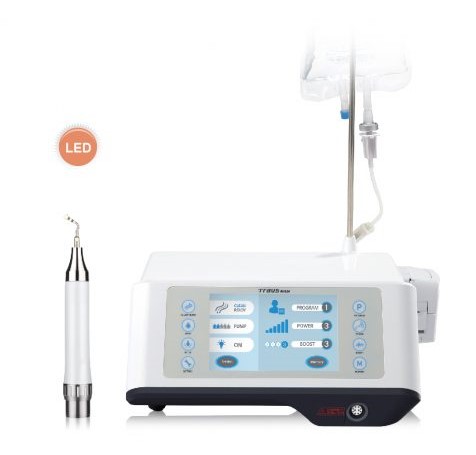
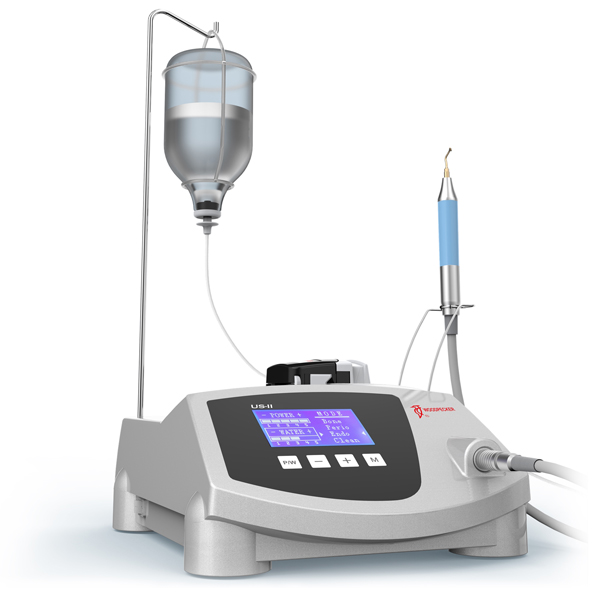
UnPiezo Scaler vs Ultrasonic Scaler
A hygiene room feels the difference immediately when the scaler is wrong for the case. If you're weighing piezo scaler vs ultrasonic scaler options for your practice, the real question is not which one sounds more advanced - it's which system gives your team better control, faster calculus removal, and a smarter return on every operatory dollar.
For private practices, this decision affects more than clinical preference. It touches appointment efficiency, patient comfort, maintenance costs, water use, aerosol management, and how often your hygienists reach for a backup hand instrument because the powered unit is not doing the job cleanly enough. That is why this is not a throwaway equipment choice.
Piezo scaler vs ultrasonic scaler: what changes in daily use?
The biggest difference comes down to how the tip moves. A piezo scaler uses linear motion. The tip moves back and forth in a mostly straight path, which creates a very precise working stroke. A magnetostrictive ultrasonic scaler uses an elliptical motion, so all sides of the tip can be active during scaling.
That sounds technical, but in the operatory it becomes practical fast. Piezo units are often preferred when clinicians want controlled, focused deposits removal with less unnecessary surface contact. Magnetostrictive ultrasonic units can feel more forgiving in access and adaptation because the tip has multiple active surfaces. Neither is automatically better. The better choice depends on how your team scales, what kinds of cases fill your schedule, and how much flexibility you want from one unit.
How each system performs around calculus and biofilm
When heavy supragingival or tenacious subgingival calculus is common in your patient base, power and efficiency matter. Both technologies can remove deposits effectively, but they do it with a different feel.
Piezo scalers are known for concentrated power at the tip. Many clinicians like that direct energy delivery because it can feel efficient on dense calculus while staying precise near root surfaces and restorative margins. In periodontal maintenance and more delicate debridement, that precision can be a real advantage.
Traditional ultrasonic systems, especially magnetostrictive designs, bring versatility. Because the tip motion is elliptical, clinicians can adapt different sides of the tip more easily across varied tooth surfaces. For teams trained on magnetostrictive units, that familiarity often translates into speed. In a busy hygiene schedule, speed matters just as much as raw power.
The trade-off is simple. Piezo often wins on precision and tactile control. Magnetostrictive ultrasonic often wins on broader adaptation and all-sides tip activity. If your providers have strong preferences, forcing a switch to save a few dollars upfront can backfire in efficiency later.
Patient comfort is not just a marketing point
Patients may not know the technology name, but they notice vibration, heat, noise, and sensitivity. Piezo units are often described as smoother and sometimes more comfortable because of the linear tip movement and the way energy is delivered. For anxious patients or those with recession and root sensitivity, that can make treatment feel less aggressive.
That said, patient comfort is not determined by technology alone. Tip selection, water flow, power settings, clinician technique, and time spent in one area all matter. A well-maintained ultrasonic unit in skilled hands can be very comfortable. A poorly used piezo unit can still create sensitivity.
If your office markets a gentler hygiene experience, piezo may support that message better. If your team already gets strong patient feedback with magnetostrictive units, there may be no reason to change what is working.
Water, heat, and aerosol considerations
Powered scaling always raises practical concerns around cooling and visibility. Both systems require water to control heat and support lavage, but the way they feel in use can differ.
Piezo systems are often appreciated for controlled irrigation and a cleaner sense of tip direction. Some clinicians feel they get better visibility because the motion is more linear and targeted. In periodontal procedures, that extra sense of control can be valuable.
Magnetostrictive ultrasonic scalers can create a different spray pattern because of the elliptical tip motion. That does not make them inferior, but it does affect how the procedure feels for both patient and operator. If aerosol reduction protocols are a major factor in your practice, this is worth evaluating chairside, not just on a spec sheet. High-volume evacuation, tip design, and technique still do the heavy lifting.
In other words, neither technology eliminates aerosol concerns. The smarter question is which unit helps your team work efficiently while supporting your infection control workflow.
Maintenance and durability matter more than the brochure says
A scaler that performs well on day one but becomes expensive to maintain is not a deal. Practices replacing aging units already know that downtime costs money.
Piezo units generally use stacks and handpieces designed around crystal activation, while magnetostrictive systems rely on a stack insert system with electromagnetic energy. That difference affects replacement parts, compatibility, and long-term upkeep. Insert wear is a real issue on both sides. Once tips wear down, efficiency drops, treatment time grows, and operators compensate with pressure they should not be using.
This is where purchasing discipline matters. Do not compare only the base unit price. Compare handpiece cost, insert or tip replacement frequency, brand support, warranty terms, and availability of parts. A cheaper unit becomes expensive fast if consumables are overpriced or hard to source.
For many private practices, the best value is a reliable name-brand system with easy-to-find replacement components and straightforward service support. Saving upfront matters, but predictable ownership costs matter more.
Training and team preference can decide the winner
There is a reason some offices swear by piezo while others will not give up magnetostrictive ultrasonic systems. Clinical training plays a major role.
If your hygienists and dentists trained extensively on one platform, switching to the other may create a learning curve in tip angulation, lateral pressure, and stroke adaptation. That adjustment is manageable, but it should be factored into the buying decision. A unit that looks better on paper may still slow down production for weeks if the team does not feel confident using it.
For startups, the choice is easier because there is no entrenched workflow to undo. In that case, evaluate what fits your expected patient mix, budget, and provider preference. For established practices, ask a harder question: will this equipment improve performance enough to justify changing habits?
Cost: upfront price vs real value
The piezo scaler vs ultrasonic scaler debate often gets pushed into a simple price comparison. That is too shallow for a serious buyer.
You need to think in terms of return on use. A lower-cost unit that lacks durability, has limited tip options, or frustrates your hygiene team is not saving you money. On the other hand, paying premium pricing through a major distributor just because a rep says it is the standard choice is not smart buying either.
Real value comes from balancing four things: reliable clinical performance, reasonable maintenance costs, staff acceptance, and a purchase price that does not crush margin. That is where independent practices have to stay sharp. Equipment decisions should support production, not pad someone else's markup.
If you are outfitting multiple operatories or replacing several aging units at once, standardizing across the office can also reduce training friction and simplify ordering for replacement tips and accessories. That kind of operational consistency has real financial value over time.
Which scaler is better for your practice?
If your priority is precision, focused tip movement, and a scaling experience many clinicians describe as controlled and refined, a piezo scaler may be the better fit. It often works well in perio-focused settings, for providers who want strong tactile feedback, and for practices that emphasize patient comfort.
If your priority is versatility, broad clinical familiarity, and an adaptation style many hygienists already know well, an ultrasonic scaler with magnetostrictive motion may make more sense. It can be a strong choice for fast-paced hygiene schedules and practices that do not want to retrain the team on a different operating feel.
For many offices, this is not about naming one universal winner. It is about matching technology to workflow. A startup with a perio-heavy plan may choose piezo for control. A general practice replacing an older unit may stick with magnetostrictive ultrasonic because the team is efficient with it already. Both decisions can be right.
The smartest buyers test beyond the spec sheet. Look at ergonomics, tip availability, noise level, serviceability, warranty support, and total replacement cost over time. If you are buying for a private practice, not a corporate purchasing department, every equipment choice should work harder for the money.
That is the practical way to look at it. Pick the scaler your team will actually use well, maintain affordably, and trust every day - because the best equipment is not the one with the loudest marketing, but the one that keeps your schedule moving and your costs under control.